.png)
Product Description
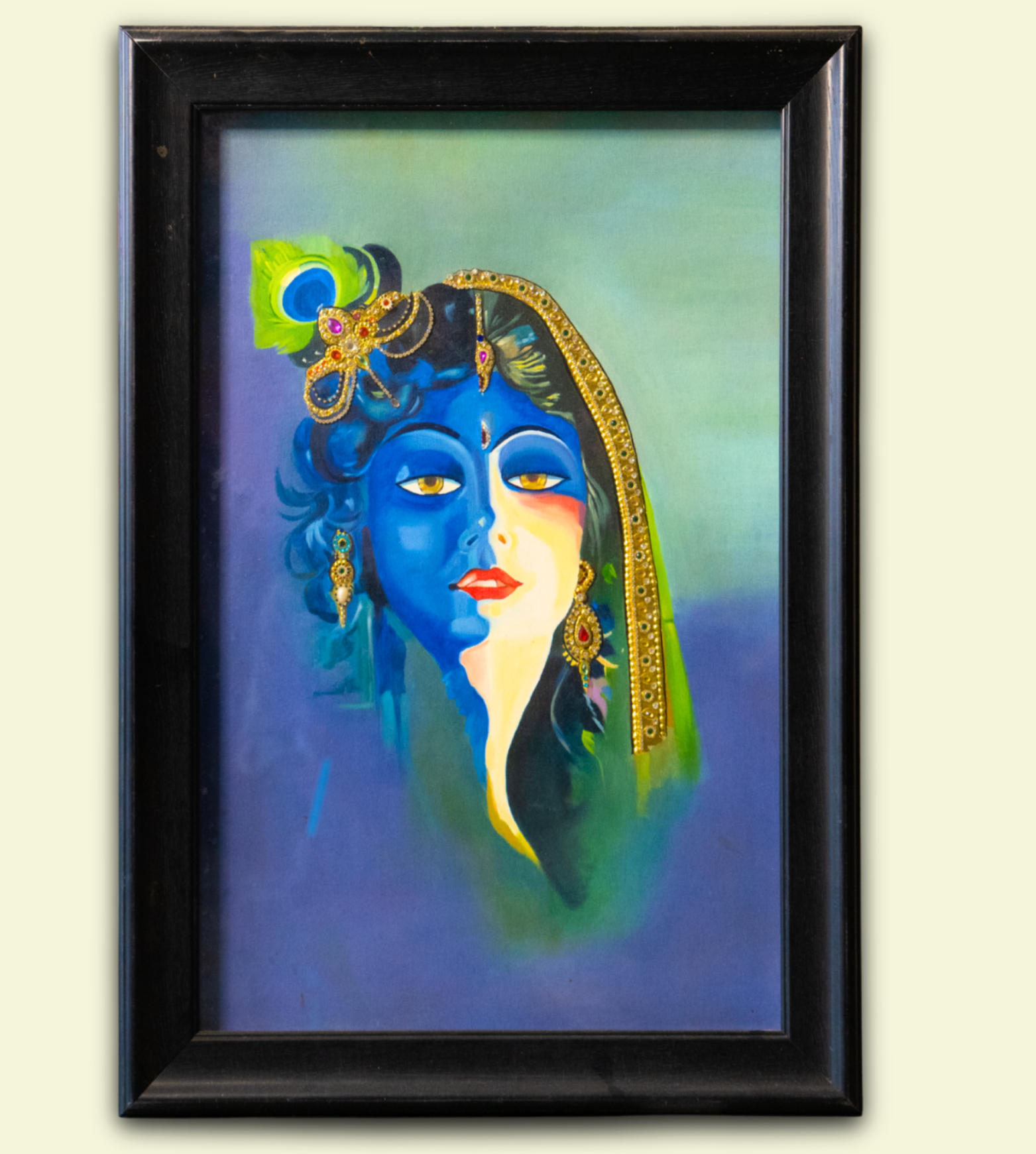
This beautiful and deeply symbolic painting presents Radha and Krishna as one divine form, creating a powerful visual representation of their eternal bond. The composition brings together the distinctive identities of both divine figures within a single harmonious portrait, with one half representing Lord Krishna and the other representing Radha.
Krishna is portrayed with his characteristic blue complexion and graceful peacock feather, while Radha is represented through her delicate feminine features, elegant adornments, and flowing veil. The seamless merging of their faces creates a striking sense of balance, suggesting that their individual identities remain distinct while being spiritually united.
The artwork beautifully expresses the idea that love and devotion can transcend individuality, bringing two souls together in perfect harmony. Through its contrasting colours, shared facial composition, and complementary ornamentation, the painting becomes a visual celebration of divine love, spiritual unity, balance, devotion, and eternal companionship.
Radha and Krishna as One Divine Form
The central concept of the artwork is the presentation of Radha and Krishna within a single unified form. Rather than depicting them as two separate figures, the painting brings their faces together, creating a powerful representation of spiritual oneness.
This unique composition conveys the idea that Radha and Krishna are deeply connected, with their divine identities complementing and completing one another.
Krishna’s Iconic Blue Complexion
The Krishna side of the portrait is distinguished by his characteristic blue complexion, an instantly recognizable element of traditional devotional representation.
The blue tones create a beautiful contrast with Radha's side while also contributing to the peaceful and spiritual atmosphere of the painting. The colour helps visually define Krishna while remaining harmoniously connected with the overall composition.
Graceful Peacock Feather
The peacock feather associated with Krishna forms an important decorative element on his side of the composition. Its delicate shape and natural beauty add a traditional devotional character to the artwork.
The feather also introduces an element of nature, complementing the artistic symbolism of Krishna and creating a graceful transition between the two halves of the divine form.
Radha’s Graceful Feminine Presence
Radha's side of the portrait is distinguished by her soft facial features, feminine adornments, and elegant veil. Her appearance brings delicacy, grace, and warmth to the composition.
The flowing veil and refined ornaments provide a beautiful contrast to Krishna's peacock feather and blue complexion, while the overall arrangement maintains visual harmony.
Harmonious Merging of Two Faces
One of the most striking artistic elements is the way the two faces merge seamlessly into one another. The transition between Radha and Krishna is designed to feel natural rather than divided.
This visual merging represents the central theme of the painting—two divine identities existing together as one harmonious spiritual presence.
Symbolism of Divine Love
The painting serves as a visual expression of the profound love associated with Radha and Krishna. Their unified form suggests a bond that goes beyond ordinary companionship and represents deep emotional and spiritual connection.
The composition transforms this concept of divine love into a simple yet powerful visual statement.
Spiritual Unity and Oneness
The unified face symbolizes oneness, suggesting that two souls connected through love and devotion can experience a profound sense of spiritual unity.
The artwork emphasizes connection rather than separation, making it a meaningful representation of togetherness, harmony, and devotion.
Balance Between Masculine and Feminine
The painting creates a visual balance between Krishna's masculine divine identity and Radha's graceful feminine presence.
Their contrasting yet complementary features demonstrate how different qualities can exist together harmoniously. The composition therefore becomes an artistic representation of balance, complementarity, and unity.
Contrasting Colours and Shared Features
The use of contrasting colours helps distinguish the two sides of the divine form while the shared facial structure connects them visually.
This artistic contrast creates depth and meaning, showing that individuality and unity can exist simultaneously within a single composition.
Elegant Traditional Adornments
Both sides of the painting are enhanced with traditional decorative elements. Krishna's peacock feather and divine styling are complemented by Radha's feminine adornments and flowing veil.
These details add richness to the portrait while reinforcing its connection with traditional Indian devotional aesthetics.
Expression of Eternal Companionship
The merged representation of Radha and Krishna reflects the idea of eternal companionship. Their presence within one form suggests an inseparable bond founded on love, devotion, and spiritual connection.
The painting therefore goes beyond a simple portrait and becomes a symbolic representation of togetherness.
Love, Devotion and Harmony
The central message of the artwork can be understood through three closely connected ideas: love, devotion, and harmony.
The union of Radha and Krishna illustrates how devotion can bring individuals together, while their complementary appearance expresses the beauty of emotional and spiritual harmony.
Traditional Devotional Inspiration with Symbolic Artistry
While rooted in traditional representations of Radha and Krishna, the painting uses a distinctive symbolic composition to communicate its message.
The unified-face concept gives the artwork a contemporary artistic character while retaining recognizable devotional elements such as Krishna's blue complexion, peacock feather, Radha's veil, and traditional adornments.
Meditative and Spiritual Atmosphere
The unified composition encourages contemplation of themes such as love, connection, balance, devotion, and spiritual unity.
Its symbolic nature makes it particularly suitable for spaces where the artwork can be appreciated not only for its visual beauty but also for its deeper spiritual meaning.
Artistic Balance and Composition
The symmetrical relationship between the two sides creates a visually balanced composition. Krishna's blue complexion and peacock feather provide one visual identity, while Radha's graceful features and veil provide the other.
Together, these contrasting elements create a cohesive portrait in which neither side overwhelms the other.
Display and Interior Appeal
This distinctive Radha Krishna artwork can become a meaningful focal point in puja rooms, meditation spaces, living rooms, bedrooms, spiritual corners, reading areas, and contemporary interiors.
Its symbolic subject and elegant composition allow it to work both as devotional art and as a sophisticated decorative piece inspired by Indian cultural heritage.
Symbol of Eternal Divine Connection
The painting ultimately represents the idea that love can create unity without erasing individuality. Radha and Krishna remain recognizable through their distinctive characteristics, yet their faces come together as a single divine form.
This makes the artwork a powerful visual reminder of love, devotion, balance, harmony, spiritual connection, and eternal companionship.
Key Features
- Subject: Radha and Krishna as one unified divine form
- Theme: Divine love, spiritual unity, harmony, balance, and eternal companionship
- Central Concept: Two divine identities merging into a single harmonious form
- Krishna: Blue complexion with traditional peacock feather
- Radha: Graceful feminine features with elegant adornments and veil
- Composition: Half-Krishna and half-Radha unified portrait
- Symbolism: Oneness, devotion, love, spiritual connection, and complementarity
- Colour Treatment: Contrasting yet harmonious tones representing both divine identities
- Decorative Elements: Peacock feather, traditional jewellery, feminine adornments, and flowing veil
- Artistic Style: Symbolic devotional portraiture with a distinctive contemporary interpretation
- Mood: Peaceful, harmonious, spiritual, romantic, and contemplative
- Spiritual Theme: Eternal love and inseparable divine companionship
- Ideal For: Puja rooms, meditation spaces, living rooms, bedrooms, spiritual areas, and contemporary interiors
Painting collection
-
Canvas Print Paintings
Regular price Rs. 5,100.00Regular priceRs. 5,100.00Sale price Rs. 4,800.00Sale -
Portrait Print Paintings
Regular price Rs. 4,100.00Regular priceRs. 4,100.00Sale price Rs. 3,800.00Sale -
Water Based Paintings
Regular price Rs. 2,100.00Regular priceRs. 2,100.00Sale price Rs. 1,800.00Sale -
Bihari Ji MukharVind Painting
Regular price Rs. 3,100.00Regular priceRs. 3,100.00Sale price Rs. 2,800.00Sale -
Swami Haridas Radhe Krishna ji
Regular price Rs. 12,500.00Regular priceRs. 12,500.00Sale price Rs. 12,000.00 -
Bihari Ji Mukhar Vind Painting
Regular price Rs. 3,100.00Regular priceRs. 3,100.00Sale price Rs. 2,800.00Sale
.png)
.png)
.png)
.png)
.png)